


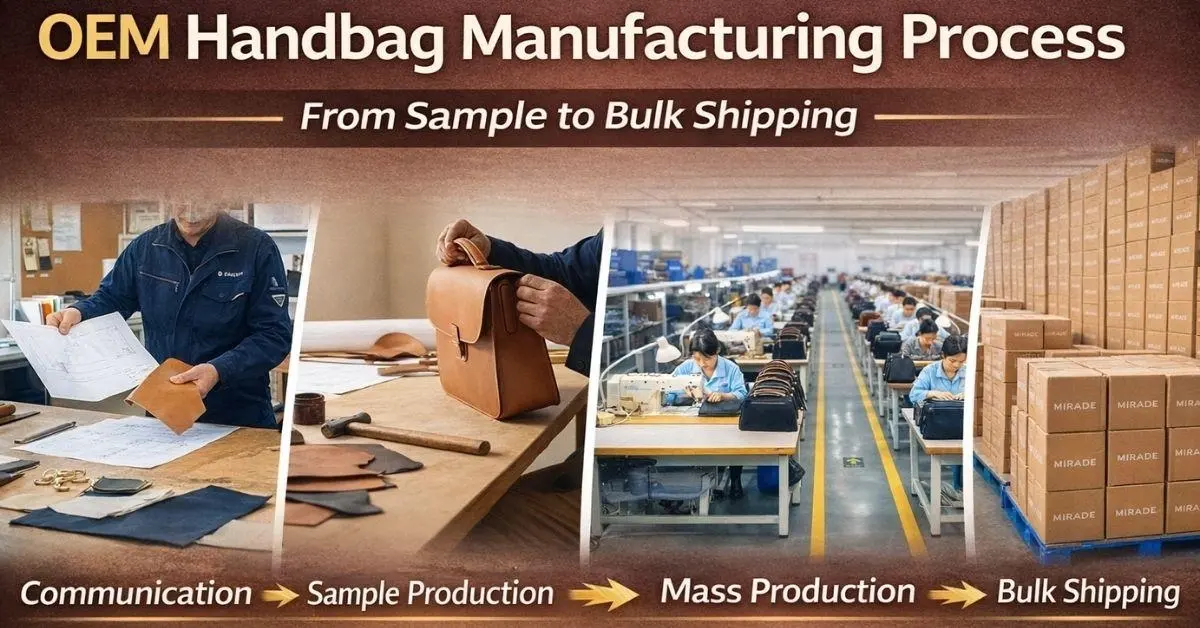
1. Start With the Product Application
The first step is to define how the bag will be used.
A backpack designed for outdoor travel has different requirements from a cosmetic bag, digital product bag, or professional tool bag.
Before development begins, buyers should consider:
- What will the bag be used for?
- Who is the target customer?
- What products will be carried inside?
- What capacity is required?
- Does the bag need padding or internal compartments?
- Does it need water resistance?
- Is lightweight construction important?
- What is the expected retail price?
These questions help establish the basic product direction.
2. Define the Bag Structure and Dimensions
After the application is confirmed, the structure can be developed.
Important specifications may include:
- Overall dimensions
- Internal compartments
- Pocket locations
- Handle design
- Shoulder straps
- Zipper placement
- Lining
- Padding
- Reinforcement
- Hardware
- Logo position
For digital product bags, for example, protection and compartment structure may be more important. Tool bags may require reinforced construction and easy access, while cosmetic bags may focus more on appearance, organization, and easy cleaning.
3. Select the Right Material
Material selection should be based on product application rather than appearance alone.
Nylon can be suitable for lightweight and performance-oriented bags, while polyester offers flexible applications and cost-effective production. Canvas can be considered when a natural and lifestyle-oriented appearance is required.
Other components, including lining, foam, webbing, zippers, buckles, and reinforcement materials, should also be considered as part of the complete product construction.
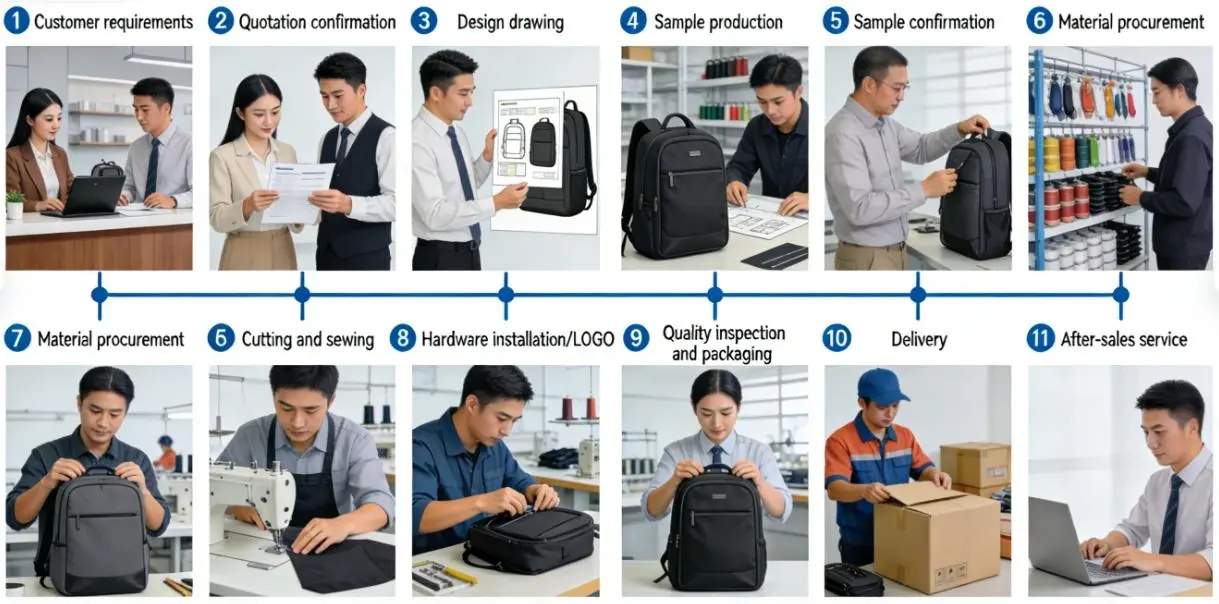
4. Develop and Confirm the Sample
Sampling is an important stage in custom bag development.
A physical sample allows the buyer to evaluate:
- Actual dimensions
- Material feel
- Color
- Product structure
- Pocket arrangement
- Stitching
- Logo placement
- Hardware
- Overall appearance
If adjustments are required, the design can be modified before moving into larger-scale production.
For B2B buyers, confirming the sample before mass production can help identify design or construction issues at an early stage.
5. Prepare the Product for Production
Once the sample is confirmed, the manufacturer can prepare the production requirements.
This may include material preparation, cutting, printing or logo application, sewing, assembly, inspection, and packaging.
A detailed product specification helps maintain consistency when the same product needs to be produced repeatedly.
6. Mass Production and Quality Inspection
During production, different components of the bag need to be assembled according to the confirmed design.
Quality checks can focus on areas such as:
- Fabric and material condition
- Stitching quality
- Zipper operation
- Hardware installation
- Dimensions
- Logo placement
- Product appearance
- Packaging requirements
The exact inspection requirements should be agreed according to the product and buyer’s quality standards.
Why Work With an Experienced Custom Bag Manufacturer?
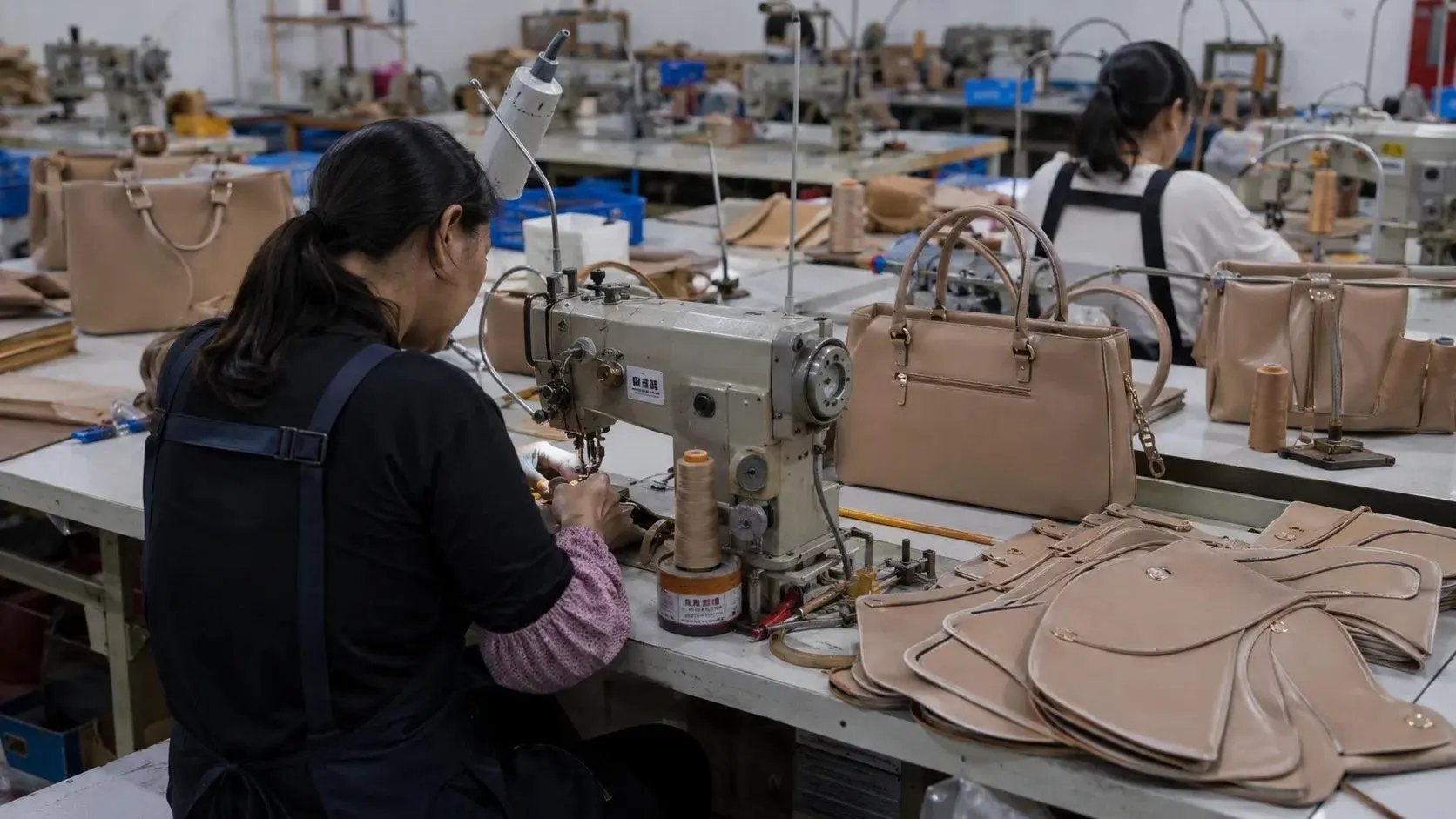
For brands and retailers, a manufacturing partner is not only responsible for producing the final product. A capable partner can also support product development, sampling, material selection, and production coordination.
Shenzhen Pinyou Handbag Products Co., Ltée. has been developing and manufacturing bags since 2017, with a 1,600-square-meter production workshop, 75 production workers, et 3 R.&D and sampling staff.
We provide development and production services for backpacks, handbags, tool bags, cosmetic bags, and digital product bags.
Whether you already have a finished design or only an initial product concept, our team can work with you to develop a practical custom bag solution.
Have a new bag project? Send us your design, reference images, product requirements, or target quantity to start the conversation.